

By Cammy Thomas
It’s that time of year again! No not tax rebate time, it’s that time where we observe the pure glee and anticipation when a new series of Love Island looms large, and eventually drops on an ever expectant, unabated audience. Whether you love it or hate it, you cannot deny or avoid the topical juggernaut that is ITV 2’s Love Island, as it rolls up like an army tank to take its target audience and beyond hostage for 8 weeks every summer. Every year a proportion of viewers (including myself) swear blind we’re not watching this year, as it consumes every aspect of life. People rush home from work, studies, or socialising to ensure we’re glued to the TV at 9 pm without fail, with the antics of each episode discussed and dissected amongst friends, family, and work colleagues. The grip the programme holds on popular culture not only in the UK but also internationally. is iron clad and unrelenting, as it puts relationship and friendship dynamics under the microscope. If you are one of those who remained steadfast in your avoidance of Love Island, the hyperbole of its incessant marketing and advertising campaigns over the years, has a way of infiltrating various mediums such as, print, radio, TV, and word of mouth, often resulting in nationwide debate and discourse, making its social impact unavoidable.
Why do I use the term social impact, that’s a bit much! you might wonder, but when a reality TV show reaches an audience of millions of young impressionable viewers for 16 weeks a year if we include the winter series, and ignites heated discussions and strong opinions, to the point where Women’s Aid released a statement in 2018 warning about emotional abuse after one of the male contestants appeared to use gas lighting tactics towards a female contestant to invalidate her feelings. Similarly, the Mental Health Foundation released a statement in 2019 voicing concerns that Love Island was promoting unrealistic body images to its young viewers. There have also been fervent debates regarding toxic masculinity, and this years winter 2023 instalment saw a role reversal, with conversations centred around toxic femininity. For a reality TV show based on summer lovin’ but in actuality provides lucrative endorsement deals, it has certainly sparked broader socially conscious conversations, making Love Island an accidental microcosm of society.
Love Island has also inadvertently exposed taboos within the Black community to a mainstream audience. Many black girls and women could relate to the ‘black girl is always chosen last’ scenario, as seen with Samira Mighty and Yewande Biala, as some black women shared that it was emotionally traumatising to be reminded of periods in their lives where they/we were made to feel undesirable and unworthy for not possessing the eurocentric beauty standards often lauded by male Love Island contestants, as the blonde haired blue eyed islanders were depicted as hot commodities both in and outside the villa. In recent years there has also been an increase in mainstream publications such as Grazia, Huff Post UK, and Cosmopolitan, highlighting the unique and specific experiences of the Black and ethnic minority contestants participating in the show.
Thankfully, Love Island producers appear to have taken note of mainstream media’s stance on how black and brown contestants, in particular black and brown women, are often disregarded and overlooked on the show, whilst also taking their duty of care seriously to ensure the demoralising ‘Black girl always chosen last’ trope does not continue to play out on our screens year after year, which could potentially result in irreparable broken self-esteem not only for their contestants, but also of young black women watching people who look like them being treated as an afterthought, or being continually rejected on national TV. The frustrations were heard loud and clear, and producers have altered the format to avoid portraying the humiliating scenario by allowing the public to choose couplings, this way, no one is left standing alone and dejected.
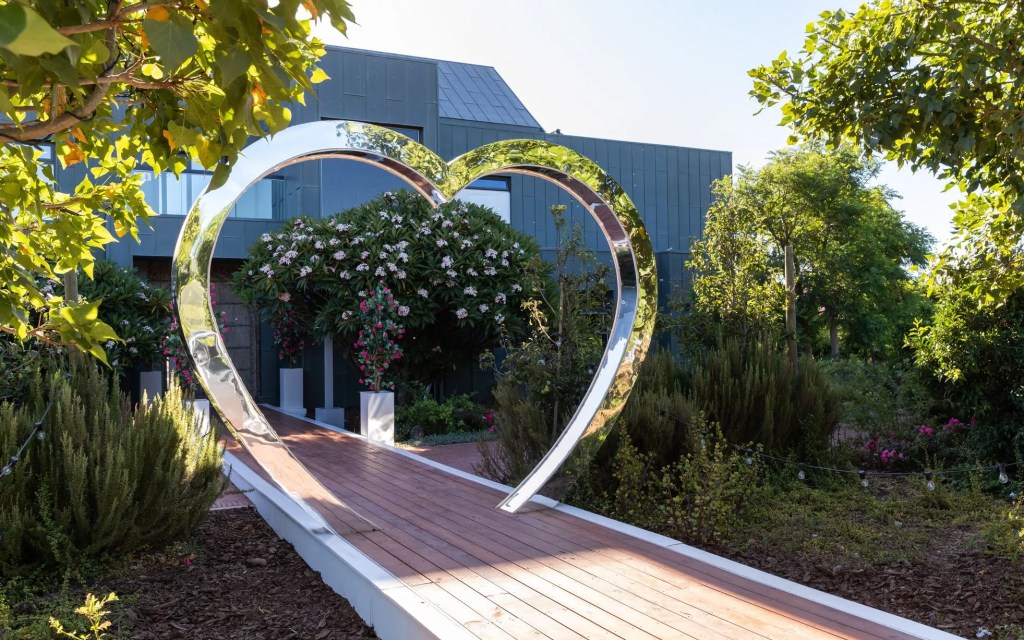
This year the Love Island team have upped their game, and turned their attention to inclusion, after realising you get extremely uncomfortable outcomes and optics if you focus on diversity alone. Come through 2023’s cast of bikini clad babes, and lean Lotharios, selected to entertain us all for the next 8 weeks. As the buzz of the first episode took off, social media platforms were ablaze with comments on how diverse this year’s cast is. Black and ethnic minorities commented that they felt seen and represented, producers were deservedly praised as it appeared they were ready to switch up the show to reflect the society we all inhabit, which is vastly multicultural and ethnically diverse. Love Island took a bold step in debuting its most diverse starting line up to date, but with change always comes resistance, and amongst the praise being heaped on producers, there were comments floating around from those who reject change, integration, and individuality, as comments such as “I’m turning off, I haven’t got a clue what they’re saying, I can’t understand them”, began to build momentum. The pearl clutching, and simultaneous frothing at the mouth reached a fever pitch after the first week wrapped on Love Island, with a so called ‘Facebook Mum’ announcing in a viral post, that she was sick and tired of watching a programme that sounded like it was “Straight Out of Compton”, never mind the fact there is not one American accent or twang floating around the villa. The facts did not seem to matter, as the Facebook mum, Debbie, went on her rant of disapproval. The offending word? “Bro’”. Yes “Bro.” A three-letter word abbreviated from ‘Brother,’ used as a term of endearment and affection to someone you have respect for and consider a close friend. As I observed the viral tweets based off the preposterous and absurd Facebook mum’s original post, as the word ‘Compton’ was top five twitter trend for two days straight, Love Island had yet again unintentionally provoked discourse and hot takes. As I scrolled and quietly seethed at such an ill informed and narrow-minded take from Debbie Downer and people like her, because believe me she’s not alone when it comes to her ignorant statement; a few things occurred to me. I pondered if these same people took issue with contestants of Love Island’s past, using differing variations of the word “Bro” such as – “Pal”, “Mate”, “Mucker”, “La’”, (Scouse derived from “Lad”), “Our Kid”, “Son”, “Fella”, “ Dude”, “Champ” and of course – “Lad”, a term one of the islanders in the current series (Mitch Taylor) uses repeatedly on the show with a broad Sheffield accent. Did Ms. Downer also make rash judgements on people who speak like Mitch, labelling them common for example, based on the choice of wording and accent alone, the way she did when presuming people who speak like Zachariah Noble and Tyrique Hyde are attempting to be “Gangsters straight out of Compton!”
Love Island has always spawned unique phrases and soundbites, which have gone on to become colloquialisms embedded within the fabric of modern English Language and British culture. Words and phrases such as “Muggy,” “ick,” “Grafting,” “My type on paper,” “Lay it on factor fifty” have become redefined and synonymous within the world of Love Island, so much so Primark have made stacks of cash by emblazoning t-shirts with Love Island slogans. Case in point, when it comes to Love Island redefining words, the word “Muggy” originally meant overcast, cloudy, and warm, but Love Island helped to remix its meaning, and it is now a description commonly used when you feel like you are being treated like a fool. Also, the word ‘Ick’ is not regarded as a word at all according to the Oxford English dictionary, yet if you say to your friend, “Nah, he’s giving me the ick you know,” she will not look at you like you’re speaking in tongues! She will understand instantly that you’re no longer attracted to the man you’re dating because of something he said or did. How can it be that the delightful Debbie and her band of merry minions of Facebook mums, are not outraged that islanders have used a word for years on the show which is not even recognised as part of the English language at all, yet they are chomping at the bit over a word which has been abbreviated from an actual dictionary recognised word, and has positive connotations and meaning. Surely, they should be more outraged at the use of words that are not even part of the English language, than words that are part of our everyday language, albeit shortened to “Bro” from “Brother.”
The reason the closed-minded Facebook mums are accepting of non-word, but common slang term “ick,” and reject the actual word, and commonly abbreviated slang term “Bro” is because of stereotyping. Upon hearing the word “Bro” (or “Bruv”), to people with a narrow scope of perspective, who lack insight or critical thinking, those words hold a negative connotation as they are associated with gangsters, and gangsters are associated with blackness. This becomes more evident as the choice of words used to describe how certain islanders speak being “Straight out of Compton”, hone’s in on the fact that the song ‘Straight Outta Compton’ is a 90’s gangster rap song, by a black 90’s gangster rap group, depicting an area in the U.S that was predominantly black in that era, ravaged by high crime and crack cocaine. This description was used for the islanders using modern day slang in a multicultural cultural accent, owing to the melting pot of ethnicities in concentrated areas such as south east and south west London, simply because the original poster’s warped perception of what she considers blackness, was infuriating for her to hear on prime time TV and would not be tolerated, resulting in a rant full of stereotyping, prejudice, and misconceptions, not only regarding the islanders themselves and the slang used by the youth of today, but it also revealed her utter disdain and revulsion for (perceived) blackness.
It is a fact as old as time itself that each generation defines itself with fashion, music, and slang, with popular music often influencing current slang and phrases (e.g. – the phrase of Love Island 2023 “It’s Giving…bad b*tch / sexy / baddie” uttered by islander Whitney Adebayo, is taken from the 2022 song ‘it’s Givin’’ by U.S rapper Latto). Slang gives each generation a sense of identity, belonging, and recognition amongst their peer groups. Slang also time stamps decades embedded within centuries of memories and trends, providing accessible bookmarks for generations past to leaf through and reminisce, or for current and future generations to look back and learn, which is why we see a recent revival of Y2K fashion and make up. Before the narrow minded Facebook mums criticise, maybe they should pause for thought, and remember some of the slang terms they used in the 90’s derived from popular culture such as “Duh”, “Sap”, “Fly”, “Hella”, “Chirps”, “Gyallis”, “Minger”, “Dibs”, and how much they’d cringe if their Filofax clutching, palm pilot parents, tried to make sense of what they were talking about in the 90’s and 00’s. Slang is not meant to be fully understood by former generations. It is created by today’s youth for today’s youth, it is not for us, it is for them.
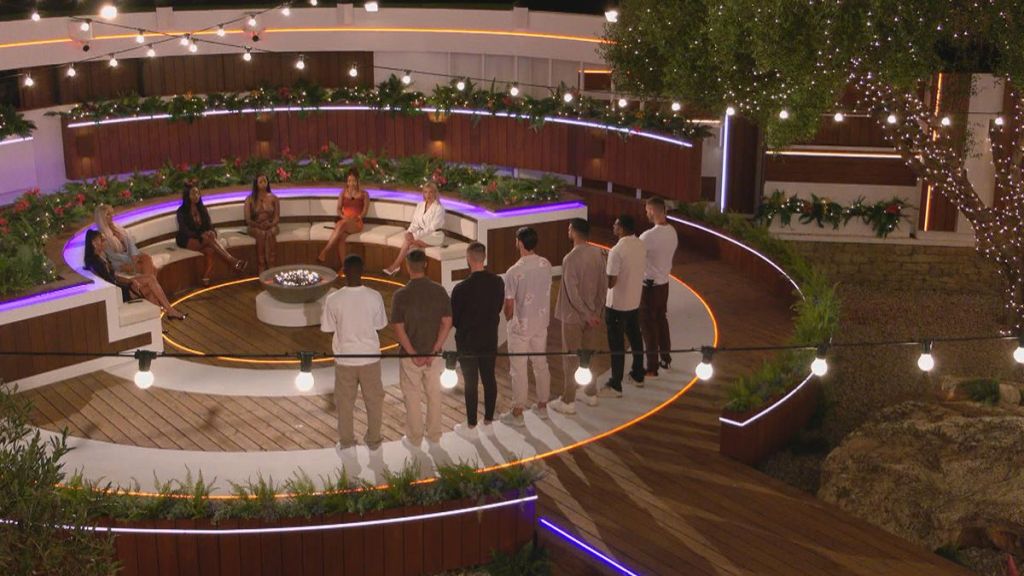
After simmering down from Debbie’s downers, fresh frustration was felt when I absent mindlessly looked at the comments section of a national newspaper (which I’ll refer to as GMG – gammon minded gatherings for the purpose of this piece), and saw the following comment – “I can’t understand a word that’s being said on Love Island, they are all talking like Bob Marley innit”. Forgive me, I must have missed the part where Bob Marley sang in a distinctive London accent on 90% of his songs, with a 5% peppering of loosely linked Jamaican patois, and the remaining 5% plucked from London’s drill genre 40 years into the future! Maybe that’s on a collection of B-sides my mum decided to hide from me, in her garden shed! (It’s not lost on me that this closed-minded commentator from GMG, could not think of another Jamaican performer who has not been dead for the last 42 years, to convey their ill-informed opinion. They could have chosen current Jamaican musical giants Spice, Vybz Kartel, Chronic Law, Pop Caan, heck, even Chaka Demus and Pliers or Sean Paul would have more cultural relevance to generation now!).
The accent heard by some of Love Island’s 2023, series 10 cast, in particular Tyrique, Zachariah, and Andre Furtado, is not Jamaican Patios, but is in fact a new accent which developed in the late 20th century amongst young working-class Brits, coexisting and socialising in the multicultural boroughs of London, where coincidentally Zachariah, Tyrique, and Andre all hail. This relatively new accent is known as Multicultural London English (MLE), regional variations of the accent are termed Multicultural British English (MBE). It is true that the accent’s roots partially stem from the mass migration of Caribbean’s to the UK after the second world war, (which included my parents and grandparents), but MLE’s origins also derive from African, Punjabi, Urdu, Bengali, Hindi, Arabic, Somali and cockney dialects. MLE and MBE is what you get when a fusion of linguistics and semantics from differing cultural backgrounds, far and wide, merge to create something brand new, accurately reflecting the sign of the times, in that a convergence of differing demographics with origins from around the globe, managed to find friendship and familiarity in each other against the harsh back drop of inner-city life. Shouldn’t the unlikely kinship and unity between these differing cultures to the point they are all influencing each other’s vernacular and slang, be a celebration of a multi-ethic country which “Welcomes all, because we’re not prejudice here, we accept and embrace everyone here.” After all, isn’t that the majority opinion in the UK each time there are vivid testimonials of discrimination, first hand encounters of racism, lived experiences of prejudice, stereotyping based on outdated preconceived notions, and factual government ordered reports such as Baroness Casey’s March 2023 review into the ‘Standards of Behaviour and Internal Culture of the Metropolitan Police Service’, where 5 chapters, and 95 pages of the review are dedicated to discrimination in all of its toxic forms and concludes there is. and I quote – “Institutional homophobia, misogyny, and racism in the MET”. The review puts London, (the home of the Love Islanders being stereotyped as “speaking like Bob Marley”) and the city where MLE emerged, under the microscope, to find there are indeed discriminatory issues and stereotyping plaguing policing, which is sadly a reflection of toxic segments of our society, demonstrated by the narrow minded Facebook mums and the GMG commentators. Institutional discrimination cannot breed without being fuelled by societal discrimination and prejudices; and vice versa.
So the next time you feel the need to inanely opine that someone who sounds different to you Sounds like they’re “Straight Outta Compton” or “Speaking like Bob Marley innit“ without knowing where they are from, how they grew up, and the socioeconomic back drop in which they were raised and socialised within, ask yourself, are you perpetuating the discriminatory and narrow-minded views as outlined in the recent Casey review, adding to regressive attitudes within factions of British society, as displayed by those viral Love Island commentators insistent on spouting bile and harmful rhetoric, or if you insist “We are one the most welcoming countries in the world”, why was hearing an amalgamation of accents on a prime time TV show, which is the result of a country enriched by a myriad of races, cultures, creeds, and ethnicities so unwelcome by a vocal majority.
Picture Credits: Main Image, ITV/The Independent, Love island heart, ITV/Bristol live, Love Island Fire pit, ITV/Digital Spy
It is not our differences that divide us. It is our inability to recognise, accept, and celebrate those differences
– Audre Lorde

 Dine On Grime / Munch on music